Migrants and refugees hosted at UN-run reception centres in Bosnia-Herzegovina, are learning to cope with the disruption caused by the COVID-19 pandemic.
“We fled from home to save our lives, to escape war, and now we are faced with this new coronavirus”, says Rozhan, Along with her husband, Ibrahim, and her three children, she made a long and arduous journey from Iraq, her home country, to Bosnia-Herzegovina in Europe.
The family are hosted at the Borići reception centre in Bihać, managed by UN Migration (IOM) along with 315 other migrants and refugees, who have escaped conflict and violence in countries including Afghanistan, Pakistan and Syria.
En route, they have been stopped and searched and detained, and they have just endured the frosts of winter. But now, they face a new, and unexpected challenge.
“I first heard of coronavirus here at the centre”, she says. “Everyone was talking about it, and there were posters explaining how we should protect ourselves.”
UN agencies working around the clock
Coronavirus Portal & News Updates
Readers can find information and guidance on the outbreak of the novel coronavirus (2019-nCoV) from the UN, World Health Organization and UN agencies here.For daily news updates from UN News, click here.
While the number of COVID-19 cases in Bosnia and Herzegovina is still considered manageable — under 500 as of 1 April — the infection rate is rising fast and is expected to peak in the coming weeks.
The authorities have taken measures to prevent the spread of the disease nationwide, such as curfews and school closures, as well as restrictions on movement in and out of the reception centres.
Meanwhile, UN agencies have been working around the clock with the authorities to ensure that some of the most vulnerable of people in the country — around 5,500 migrants and refugees hosted in the country’s reception centres — are protected, too.
With schools closed, learning goes online
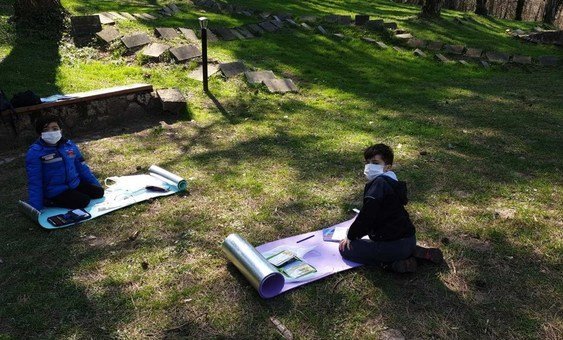
“Most refugee and migrant children have already lost several years of schooling,” says Amila Madžak, an officer with UNICEF Bosnia and Herzegovina. “The COVID-19 pandemic makes their experience even more difficult, now that all schools have been closed.”
For children residing in three temporary reception centers — Borići, Sedra and Bira — online classes have been organized by UNICEF and Save the Children in cooperation with the Ministry of Education, and with the support of the European Union. “We are making sure that these kids have access to public education, including online education”, says Madžak.
In the country’s Una-Sana region, teachers from schools attended by refugee and migrant children, have been doing the hard work of preparing materials for online classes, including live streaming or preparing videos with schoolwork instructions.
“Given that teachers weren’t trained in online education, it’s a challenge for us to adapt”, says Senka Rekanović, a local teacher. “But we’re already achieving a lot, including higher attendance rates. We have ‘cultural mediators’ who are helping children access lessons online and follow instructions for their homework. I’m proud of our kids”.
“When learning online, children from the centres need more psycho-social support and more help overcoming language barriers”, says Adnan Kreso, adviser to the Minister of Education of Una-Sana. “But thanks to our dedicated educators and the support of UNICEF and Save the Children, we’re meeting those needs”.
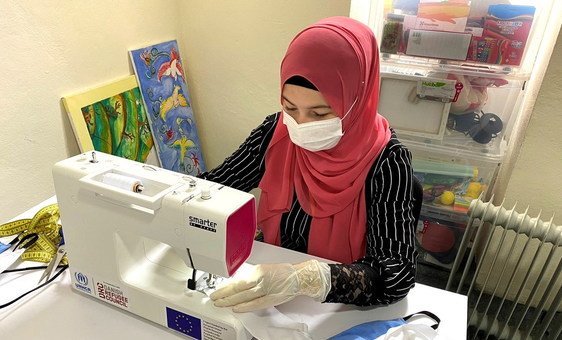
Some in-person classes are taking place at reception centres, too, only with smaller groups of children, all of whom are given personal protective equipment and disinfectant.
Taking care in uncertain times
UN Migration (IOM) is working to prevent the spread of COVID-19 among people in the centres.
The agency has installed sanitizer stations, is educating staff and residents about safety, and has stepped up cleaning of the facility.
In line with social distancing guidelines, community kitchens have been temporarily closed, to avoid large gatherings.
Despite the disruption to their lives, Rozhan and her family understand why the new measures are necessary. “We are safe here”, she says.
Courtesy:UN News
Comments