The UN's main environmental agency lays out ways the world can deal with "loss and damage" from climate change, writes Joydeep Gupta
It
is now known that human societies are not able to adapt to all the
impacts of climate change. There is now so much extra greenhouse gases
(GHG) in the atmosphere, so little effort to mitigate GHG emissions,
even less for adaptation, that impacts are occurring and will occur –
with more severity and higher frequency.
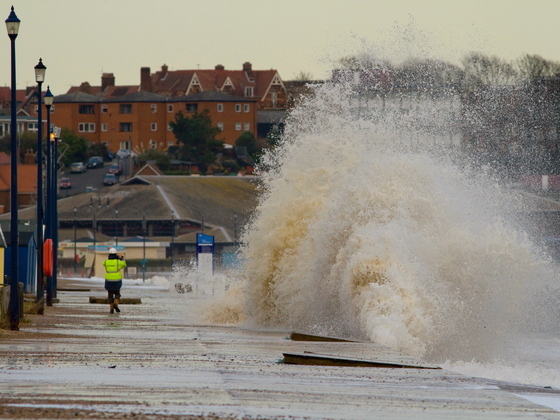
The inevitable consequences are what is called "loss and damage", which is defined by a recent report from the United Nations Environment Programme (UNEP) as the adverse effects of climate change that cannot be avoided through cutting carbon or managed through adaptation to climate change.
The inevitable consequences are what is called "loss and damage", which is defined by a recent report from the United Nations Environment Programme (UNEP) as the adverse effects of climate change that cannot be avoided through cutting carbon or managed through adaptation to climate change.
The latest report
of the Intergovernmental Panel on Climate Change (IPCC) reconfirms that
as the world has become 0.85C warmer than in the late 19th century,
climate change is making storms, floods and droughts more severe and
more frequent and also raising the sea level. Going by this, countries –
especially in the tropical zone – have been facing loss and damage due
to climate change for at least a couple of decades.
The IPCC has forecast that by 2100, maize production in China can go down anything between 4% and 32% if the world is 3C warmer than in the pre-Industrial Age; while China’s rice yields would drop within a range of 23% to 40%. Under a 2C scenario maize production could drop by 10% to 22%, and rice by 14% to 32%.
Rising threat?
Perhaps the first systematic study of such loss and damage following an event occurred after the 2003 heat wave in Europe, which killed around 30,000 people, melted 10% of all the ice on Alpine glaciers, thawed permafrost in Siberia and Scandinavia and led to a loss of US$14.7 billion in agriculture in the European Union alone.
The IPCC has forecast that by 2100, maize production in China can go down anything between 4% and 32% if the world is 3C warmer than in the pre-Industrial Age; while China’s rice yields would drop within a range of 23% to 40%. Under a 2C scenario maize production could drop by 10% to 22%, and rice by 14% to 32%.
Rising threat?
Perhaps the first systematic study of such loss and damage following an event occurred after the 2003 heat wave in Europe, which killed around 30,000 people, melted 10% of all the ice on Alpine glaciers, thawed permafrost in Siberia and Scandinavia and led to a loss of US$14.7 billion in agriculture in the European Union alone.
In large parts of Asia, Europe and Australia, the
frequency of heat waves has increased since 1950. Recent studies suggest
that severe heat waves, formerly occurring twice a century, are now
expected to occur twice a decade.
Authors of the UNEP report have been studying the various effects of Typhoon Haiyan, which hit the Philippines in 2013, killing around 6,300 people and displacing nearly 800,000 more.
Authors of the UNEP report have been studying the various effects of Typhoon Haiyan, which hit the Philippines in 2013, killing around 6,300 people and displacing nearly 800,000 more.
The typhoon also led to the loss of 260,000 tonnes of
rice when paddies were inundated by storm surges. These surges were
worsened because in the Philippines, the sea was already 30
centimetres higher in 2013 than it had been in 1993. In many islands,
the surges affected freshwater supplies by getting into ponds and
aquifers. It will be years before the salt in the water is sufficiently
diluted for people to be able to use it.
Loss and damage can occur from sudden events such as storms, flash floods and landslides. They can also be due to the slow effects of climate change: increasing average temperature, sea level rise, drought, soil salinisation and ocean acidification. All these disrupt food production, water supply, infrastructure and settlements, and human lives and livelihoods.
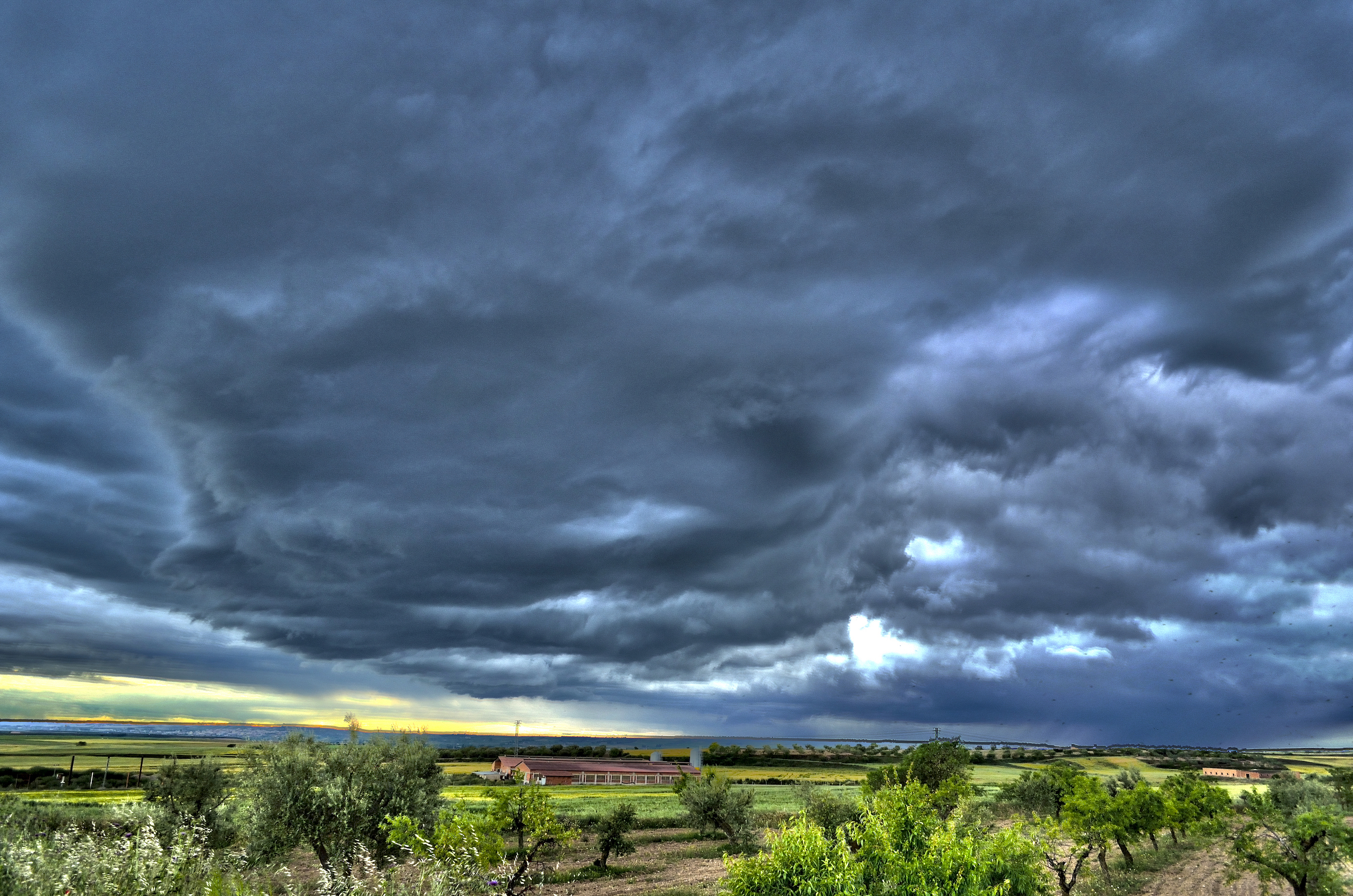
Storm on the horizon. (Image by Javier Ruiz)
At the beginning of 2015, in Niger, Nigeria, Mali, Chad, neighbouring countries in the Sahel and in the semi-arid drylands of East Africa, an estimated 20.4 million people were suffering serious food insecurity due to drought, says the UNEP report. Increased drying temperatures – again an effect of climate change – have partially offset the recovery of rainfall since the great drought of the 1980s.
In the US, California faced its worst drought in 1,200 years from 2012 to 2015. The UNEP report refers to a range of scientific research that has suggested a link between human induced warming of the atmosphere and an increase in the occurrence, strength and length of high impact droughts in this region. The economic impacts of the drought on California agriculture in 2015 alone were estimated at US$2.7 billion.
About 60% of California’s water supply comes from groundwater, a store overdrawn for many decades. The long drought drastically increased groundwater withdrawal and, as a result, lowered the groundwater level and storage capacity. Reduced rainfall also means less replenishment for the aquifers. This has led to an irreversible aquifer-system compaction, causing the land to subside. In 2014 a strip of land 96 kilometres long subsided by 33 centimetres.
With over 60% of global ecosystems and their services already degraded or exploited unsustainably, climate change worsens adverse consequences, making it important for policymakers to know what is going on and what to expect.
Loss and damage can occur from sudden events such as storms, flash floods and landslides. They can also be due to the slow effects of climate change: increasing average temperature, sea level rise, drought, soil salinisation and ocean acidification. All these disrupt food production, water supply, infrastructure and settlements, and human lives and livelihoods.
Storm on the horizon. (Image by Javier Ruiz)
At the beginning of 2015, in Niger, Nigeria, Mali, Chad, neighbouring countries in the Sahel and in the semi-arid drylands of East Africa, an estimated 20.4 million people were suffering serious food insecurity due to drought, says the UNEP report. Increased drying temperatures – again an effect of climate change – have partially offset the recovery of rainfall since the great drought of the 1980s.
In the US, California faced its worst drought in 1,200 years from 2012 to 2015. The UNEP report refers to a range of scientific research that has suggested a link between human induced warming of the atmosphere and an increase in the occurrence, strength and length of high impact droughts in this region. The economic impacts of the drought on California agriculture in 2015 alone were estimated at US$2.7 billion.
About 60% of California’s water supply comes from groundwater, a store overdrawn for many decades. The long drought drastically increased groundwater withdrawal and, as a result, lowered the groundwater level and storage capacity. Reduced rainfall also means less replenishment for the aquifers. This has led to an irreversible aquifer-system compaction, causing the land to subside. In 2014 a strip of land 96 kilometres long subsided by 33 centimetres.
With over 60% of global ecosystems and their services already degraded or exploited unsustainably, climate change worsens adverse consequences, making it important for policymakers to know what is going on and what to expect.
Interview with Dr Koko Warner about her work at United
Nations University Institute for Environment and Human Security / Camera
and editing: Allard Detiger
What is to be done
UNEP suggests a number of risk management strategies and instruments described in the Sendai Framework for Disaster Risk Reduction. These are usually for slow onset phenomena such as sea level rise, but can become very useful in dealing with sudden events such as a storm surge. Hurricane Sandy in 2012 would have caused far more damage in New York if the authorities had not been planning for such an event since 2008, UNEP said.
With the IPCC now predicting a sea level rise of 1.3 metres by 2100, such planning and action – whether building walls or planting mangroves along the coast – become crucial.
There are well known methods of risk transfer, such as insurance, which the UNEP recommends for sudden events such as storms. But it is not optimal for something like inundation of a floodplain every monsoon: due to the near certainty of such an occurrence, the premium would be forbiddingly high, even if an insurance firm was prepared to take on the risk.
For such events, the best way out is to teach the affected population how to handle them and how to live them, says the report. Researchers have often been surprised by the depth of traditional knowledge available to deal with events such as monsoon-induced floods. But policymakers can always help out – one suggestion in the report is to establish local reserve funds that residents can draw on during times of trouble.
Lost and found in climate talks
For many years, loss and damage has been an awkward subject for developed countries at UN climate talks. Lawyers told negotiators from the US government that any acceptance of loss and damage due to climate change would open the door to compensation suits in US courts, and therefore should thwart the concept.
But NGO representatives at climate talks as well as delegates from some poor countries kept pushing. As a result, the Warsaw International Mechanism on Loss and Damage was established at the 2013 UNFCCC summit held in the Polish capital. The 2015 Paris Agreement on climate change turned that into a permanent institution.
The Paris Agreement also came up with some specific suggestions to avert or minimise loss and damage, such as early warning systems for storms and floods; emergency preparedness; comprehensive risk assessment and management; risk insurance facilities, climate risk pooling, and other insurance solutions; and how to improve the resilience of communities, livelihoods and ecosystems.
The executive committee that was set up under the Warsaw mechanism has met twice this year, and is scheduled to meet once more before the next climate summit this November. Harjeet Singh of the NGO ActionAid, an expert on loss and damage, told thethirdpole.net/indiaclimatedialogue.net that the action now centres mainly on how to handle displacement of people due to climate change effects and on risk transfer through various forms of insurance.
“There may not be much headway on loss and damage at the political level by the next summit,” Singh said, “but operationally the executive committee is making some headway.” The committee has 20 members, ten from developed and ten from developing countries.
What is to be done
UNEP suggests a number of risk management strategies and instruments described in the Sendai Framework for Disaster Risk Reduction. These are usually for slow onset phenomena such as sea level rise, but can become very useful in dealing with sudden events such as a storm surge. Hurricane Sandy in 2012 would have caused far more damage in New York if the authorities had not been planning for such an event since 2008, UNEP said.
With the IPCC now predicting a sea level rise of 1.3 metres by 2100, such planning and action – whether building walls or planting mangroves along the coast – become crucial.
There are well known methods of risk transfer, such as insurance, which the UNEP recommends for sudden events such as storms. But it is not optimal for something like inundation of a floodplain every monsoon: due to the near certainty of such an occurrence, the premium would be forbiddingly high, even if an insurance firm was prepared to take on the risk.
For such events, the best way out is to teach the affected population how to handle them and how to live them, says the report. Researchers have often been surprised by the depth of traditional knowledge available to deal with events such as monsoon-induced floods. But policymakers can always help out – one suggestion in the report is to establish local reserve funds that residents can draw on during times of trouble.
Lost and found in climate talks
For many years, loss and damage has been an awkward subject for developed countries at UN climate talks. Lawyers told negotiators from the US government that any acceptance of loss and damage due to climate change would open the door to compensation suits in US courts, and therefore should thwart the concept.
But NGO representatives at climate talks as well as delegates from some poor countries kept pushing. As a result, the Warsaw International Mechanism on Loss and Damage was established at the 2013 UNFCCC summit held in the Polish capital. The 2015 Paris Agreement on climate change turned that into a permanent institution.
The Paris Agreement also came up with some specific suggestions to avert or minimise loss and damage, such as early warning systems for storms and floods; emergency preparedness; comprehensive risk assessment and management; risk insurance facilities, climate risk pooling, and other insurance solutions; and how to improve the resilience of communities, livelihoods and ecosystems.
The executive committee that was set up under the Warsaw mechanism has met twice this year, and is scheduled to meet once more before the next climate summit this November. Harjeet Singh of the NGO ActionAid, an expert on loss and damage, told thethirdpole.net/indiaclimatedialogue.net that the action now centres mainly on how to handle displacement of people due to climate change effects and on risk transfer through various forms of insurance.
“There may not be much headway on loss and damage at the political level by the next summit,” Singh said, “but operationally the executive committee is making some headway.” The committee has 20 members, ten from developed and ten from developing countries.
courtesy:chinadfialogue
Comments